
How to sell the apartments nobody wants: low floors, poor views and difficult layouts
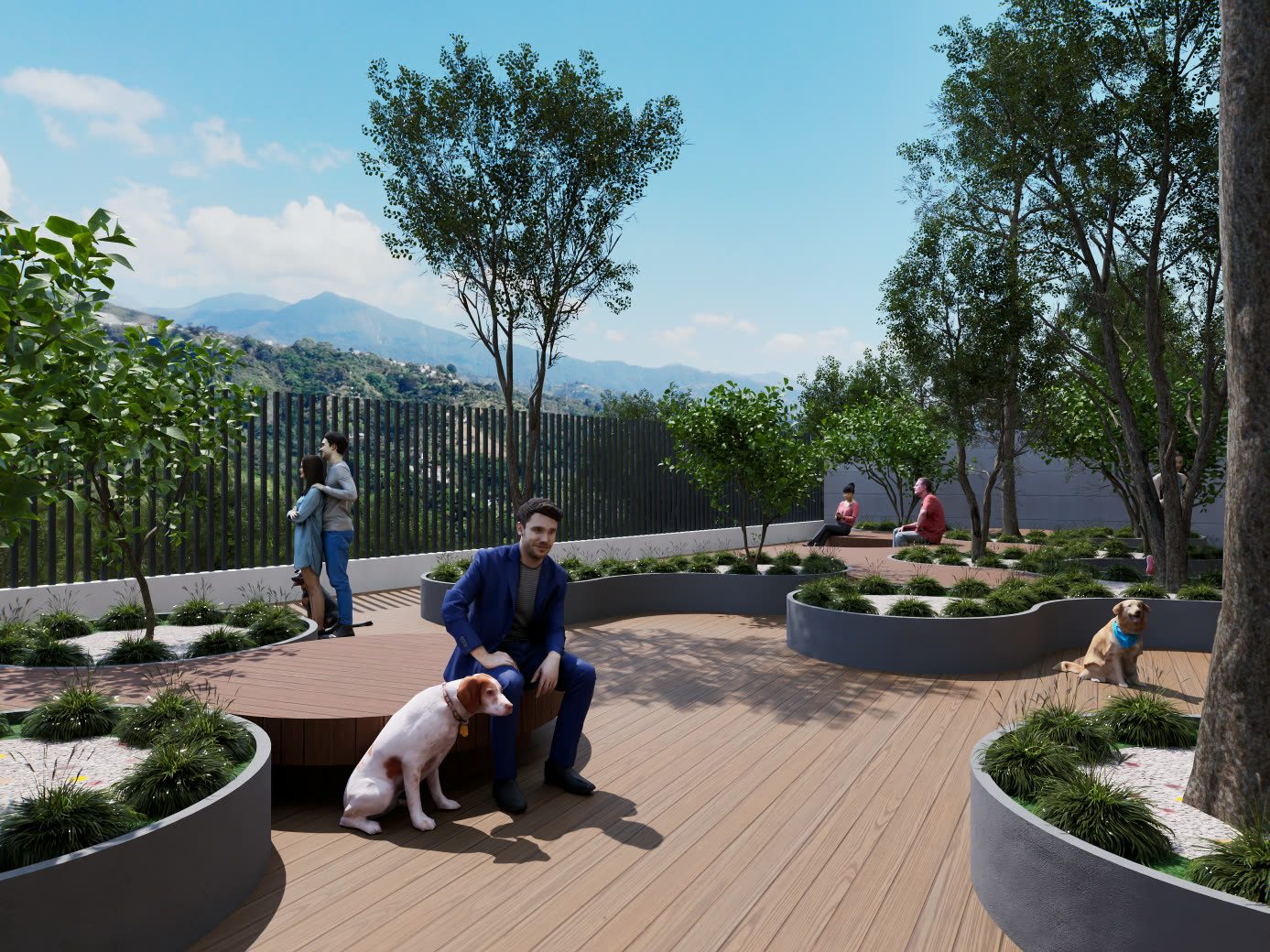
Every sales manager knows it: the first apartments almost sell themselves, and the last stretch of inventory slows down. What is left is always the same: the low floors, the units facing the building next door, the layout with a strange shape or the one next to the trash room.
The temptation is to discount them until they go. But before touching the price, check one thing: these apartments are not selling badly because they are bad, but because nobody has ever shown them.
Want to see this on your project? Book a free demo
The cover render problem
Think about your project's material. The facade render is taken from the most flattering angle. The interior render is the corner apartment with double windows. The view in the brochure is from the top floor. It makes sense: with a limited image budget, you show the best.
The side effect is that the second-floor buyer arrives with that image in mind. When they discover their view is different, they do not compare their apartment with reality: they compare it with the promise of the render. And it loses.
First, find out why it isn't selling
Before changing anything, it's worth knowing what is going on with those units. Five questions help separate a problem with the apartment from a problem with how it's being sold:
- Does it appear in the sales material? If there isn't a single image of that unit, buyers have never really seen it.
- Do the advisors show it? It's normal for a sales team to steer clients toward what sells easily. Ask how many times that unit was offered last month.
- Which objection keeps coming up? "It's too dark", "it faces the building next door", "I don't know where the bed goes". Each objection calls for a different answer.
- How does the price compare with its neighbors? Compare the price per square meter with the units in the same project that did sell and with nearby competitors.
- Who asked about it? If the few interested buyers share a profile, that's your buyer.
Show each unit as it is
With a model built in a graphics engine like Unreal Engine, that limitation disappears. The project exists completely in 3D, so there is no need for one render per unit: the buyer can stand in their exact apartment, on their floor and with their orientation, and see what they will see when they live there.
Showing the weaker view seems counterintuitive, but it works for two reasons. First, it removes the surprise, which is what breaks trust. Second, it lets the sales rep talk about what that unit does have, which is almost always something. We cover it in depth in how to show the view and light before building.
The advantages nobody mentioned
- Low floor: access without depending on the elevator, closeness to the amenities, sometimes a private patio or terrace, and a lower entry price.
- Closed view: more privacy, less street noise and, depending on orientation, a better temperature.
- Difficult layout: that strange shape is often the one that best fits a study, a guest room or a home office.
The problem is that these advantages do not show on a floor plan. They show when the buyer walks through the furnished space, with light coming through the window and the furniture placed where it makes sense.
Reframe the difficult layout
The layout that does not sell usually has a reading problem: in plan it looks badly distributed because nobody has furnished it. In the model you can show it with two or three different furniture setups (with a home office, with a children's room, as a rental unit) and let the buyer pick the one that works for them. If they can also change the finishes in front of them, they stop seeing "the leftover unit" and start seeing theirs.
Take it to whoever does want it
Every difficult unit has its buyer; the job is to find them. The low floor with a patio is ideal for a family with pets or for an older adult. The cheapest unit in the project is the entry point for an investor looking for rental income, or for a Colombian abroad buying with the future in mind. That buyer is rarely nearby: that is why it pays to have a tour of that specific unit that the sales rep can send over WhatsApp and walk through with them on a video call.
What to show for each hard-to-sell unit, and to whom
| Unit | What to show in the model | Who it may suit |
|---|---|---|
| Low floor | The patio or terrace, access without the elevator and how close it is to the amenities | Families with pets or small children, older adults, first-time buyers |
| Blocked view | The privacy, the real light at different times of day and the quiet away from the street | People who work from home, investors looking for rental income |
| Odd-shaped layout | Two or three ways to furnish it: with a study, with a kids' room or as a rental unit | Anyone who needs a workspace or an extra room |
| Next to service areas | The real distance to the trash room or equipment, the insulation and the entry price | Budget-conscious buyers, investors |
And the price?
Pricing stepped by floor and view is normal and buyers understand it, as long as they can see the difference. What wears things down is the unexplained discount, which also sends a signal to those who already bought. With the model, the price difference has an argument: the buyer sees what they pay for at each step and what they do not.
A four-week plan for slow inventory
- Week 1, diagnosis and material. Answer the five questions above and produce, from the model, the assets for each hard unit: its real view, its light and its furniture options.
- Week 2, the pitch. Define the buyer profile for each unit and the line the advisor uses to present it. Rehearse it with the team.
- Week 3, take it to its buyer. Ads aimed at that profile and a WhatsApp message with the tour of that specific unit, not the project in general.
- Week 4, measure. How many opened the tour, how many asked for an appointment and how many reserved. Only with those numbers should you decide whether the price needs adjusting.
To organize that follow-up, see sales room metrics and how to answer home buyers' objections.
Frequently asked questions
Why do the last apartments in a project stay unsold?
They are almost always the units with a visible drawback, such as a low floor, a blocked view or an awkward layout. They also tend to be the ones that never appeared in the sales material, so buyers compare them with the cover render instead of with what they really offer.
Should you lower the price of apartments that don't sell?
First show them properly and take them to the right buyer. Pricing by floor and view is normal, but an unexplained discount wears down the project and sends a bad signal to those who already bought.
How do you show an apartment with a bad view?
As it is, with its real view from that floor, together with what it does have: privacy, less noise or a better temperature. Showing the limitation avoids the surprise, which is what breaks trust.
Who is a low-floor apartment good for?
Families with pets or small children, older adults who would rather not depend on the elevator, and buyers looking for the lowest entry price in the project, especially if the unit has a patio or terrace.
Sources
Zillow Research — 3D tours and virtual tools · Matterport — Properties with 3D tours sell up to 31% faster
Ready to accelerate the sale of your project?
We build your project once in Unreal Engine, and the renders, video, 360° tours and interactive sales room all come from it, ready for any phone.
Request a demo